Your logo is on your van, your website, your quotes and your social profiles. Before you shake anyone's hand, that branding has already told them whether you are worth calling or not. Small business branding done well closes that gap between what you actually are and what a first-time visitor assumes you are. Done badly, it quietly costs you work every single day without you realising it.
This post walks through why branding matters for local and independent businesses, what "professional" actually means in practice, and the straightforward steps you can take to look like the credible, established operation you already are.
What branding actually is (and what it is not)
Branding is not just a logo. It is the full set of visual and verbal signals your business sends every time someone sees or hears from you. That includes:
- Your logo and its proportions
- Your colour palette and how consistently you use it
- Your fonts and type styles
- The tone and vocabulary of your copy
- How your images feel (warm and personal versus cold and corporate)
- The quality of your printed materials and digital touchpoints
If any one of those elements is inconsistent, low-quality or just absent, it creates friction. Friction makes people hesitate. Hesitation usually means they call someone else.
Professional branding does not mean expensive or corporate. It means deliberate. Every choice looks like it was made on purpose.
Why it matters more for small businesses than big ones
Large chains have brand recognition built over years of advertising spend. When someone sees a big-name logo, familiarity does the trust-building work for them.
A small local business has to earn that trust cold, often from a single touchpoint - a Google search result, a Facebook post, a leaflet through a door, or someone arriving on your website for the first time.
In that moment, your branding is the only thing standing between a click away and a phone call.
Consistent, well-crafted visuals signal:
- You are established and serious about your work
- You pay attention to detail (which transfers to assumptions about your service)
- You are worth the price you are asking
The flip side is equally true. A mismatched logo, low-resolution images, three different fonts across your materials, or copy that does not quite sound right will raise quiet doubts in a prospect's mind before they have read a single word about what you do.
The five elements that separate amateur from professional
1. A logo that works at every size
Your logo needs to be legible on a business card and on the side of a van. If it has fine detail, thin lines or tiny text that disappears at small sizes, it will let you down. A proper logo comes in multiple formats: full-colour, reversed (white on dark), and a simplified mark or icon version for contexts where only the full lockup does not fit.
2. A consistent colour palette
Pick two or three colours and stick to them everywhere. Not roughly the same blue - exactly the same blue, using the same hex code, Pantone reference or CMYK value across print and digital. Inconsistent colours, even subtle ones, make a brand feel patched together.
3. Typography with a job to do
You need a heading font and a body font. They should complement each other and both be readable. Using six different fonts across your materials, or choosing a display font that is hard to read at small sizes, undermines the polish of everything else.
4. Imagery that belongs together
Stock photos that look like stock photos, or a mix of styles lifted from different sources, create a visual disconnect. Your photography (or illustration style) should feel consistent in tone, colour treatment and subject matter. Warm, real, South Devon - or whatever genuine quality defines your business - beats generic every time.
5. Copy and voice that matches
Branding is not purely visual. If your logo and design look sharp but your copy sounds rushed, jargon-heavy or off-brand, the gap between those two things is noticeable. Pick a voice - plain, direct, friendly, expert - and keep it consistent from your website headline to your out-of-office email reply.
Common mistakes that make a small business look smaller
- Using the logo from a free builder alongside professionally designed print materials. Mismatched quality between touchpoints is more damaging than consistently modest quality.
- Resizing a JPEG logo until it is pixelated.Always work from vector source files (SVG or AI/EPS). If you do not have them, ask your designer.
- Different versions of your brand name in different places.If you are "J&M Builders" on Companies House but "J and M Building Services" on Facebook and "JM Builders Ltd" on your van, people cannot search for you and it looks disorganised.
- Low-contrast colour combinations.Pale text on a pale background is hard to read and fails accessibility standards. It also looks unfinished.
- Letting it drift over time.Old branded materials mixed with new ones, or social graphics made in a hurry with slightly different colours, erode the consistency that built the impression of quality in the first place.
Where branding intersects with your website and search visibility
Branding and your website are not separate problems. A professionally designed website that carries your brand consistently does a second job: it backs up the impression you made offline and turns visits into enquiries.
This is especially true for local search. When someone finds you through Google, the quality of the page they land on directly affects whether they trust you enough to get in touch. Our web design service is built around exactly this - conversion-focused design that carries your brand through every page and makes it easy for visitors to take the next step.
The same logic applies to local SEO. If your Google Business Profile, website and printed materials all look and sound like the same business, it reinforces trust at every touchpoint in a buyer's journey - from the first search result to the decision to call.
What professional graphic design actually delivers
If you are working with a proper graphic designer rather than a template tool, you should get:
- A brand discovery process - questions about your audience, competitors, values and positioning before a single concept is drawn.
- Multiple concepts with rationale, not just "here is a logo".
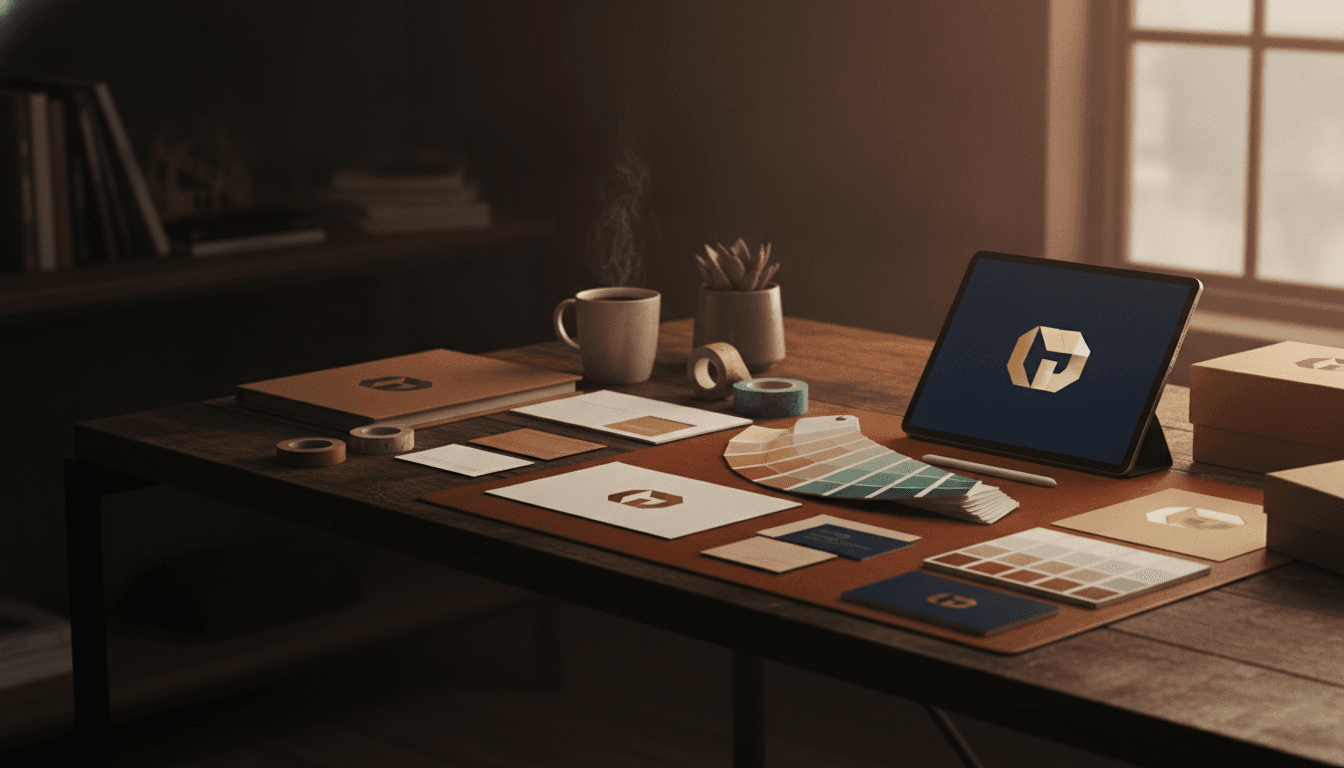
- A brand guidelines document - the rules for how everything is used, so you and anyone who works with you can apply the brand consistently without phoning the designer each time.
- Supplied files in every format you need - print-ready, screen-optimised, black and white, reversed.
- Typography and colour specifications so the brand can be reproduced accurately by anyone.
Our graphic design service covers the full scope: logo design, brand identity, print materials, and the guidelines that tie it all together. If you are based in or around Torquay, our graphic design service in Torquay works with local businesses across the town. We cover Paignton too - see graphic design in Paignton - along with the wider South Devon area. You can see the full list of areas we work with on our areas we cover page.
Do you need a rebrand or just a polish?
Not every business needs to start from scratch. Sometimes the bones are good and the work is about:
- Getting your logo into vector format and standardising the versions
- Nailing down the exact colour codes you are already using approximately
- Writing a short brand voice guide so your team and suppliers stay on message
- Commissioning a consistent set of images for the website and social media
A designer should be honest with you about which situation you are in. If your current identity has equity - people know it, it is already consistent, it reflects your positioning - a light-touch refresh is often the smarter move than a full rebrand.
Frequently asked questions
How much does professional branding cost for a small business?
There is no single answer because scope varies a lot. A logo and basic brand guidelines is a smaller job than a full identity system with print materials, templates and a brand voice guide. The more useful question to ask is: what is a new client worth to you, and how many extra enquiries would better branding need to generate to pay for itself? For most local businesses, the answer makes the investment look very reasonable.
Can I build a brand identity myself using Canva or a similar tool?
You can create usable materials in Canva and for some businesses it works well enough early on. The limitation is that template-based tools make it easy for your brand to look like everyone else's template. If you are at the stage where winning better clients matters more than keeping costs at zero, professional design is worth the step up.
How long does a branding project take?
A focused logo and identity project typically takes a few weeks from briefing to final files, depending on how many revision rounds are involved and how quickly you can provide feedback. If you need print materials produced alongside the identity, allow more time. Rushing branding to hit a deadline usually produces a result that needs redoing sooner.
Does my branding affect my Google rankings?
Not directly - Google does not read your Pantone colours. Indirectly, yes. A professional-looking website reduces bounce rates, earns more return visits and generates more enquiries and positive reviews, all of which are signals that matter for local search performance. Branding and SEO are separate disciplines that reinforce each other.
Ready to look the part?
If your current branding is holding your business back, or you are starting fresh and want to get it right from day one, we can help. Local Leads Digital works with owner-led businesses across Torbay and South Devon to build brands that win the right clients and support long-term growth.
Get in touch for a free strategy session and we will talk through where your brand is now and what a stronger identity could do for your business.